
Looking for a handcrafted, sturdy and beautiful cutting board? Maybe you’re here to see one of a kind serving pieces that will make your gathering stand out? You’re at the right place. Let’s design a piece that is both functional and fascinating .
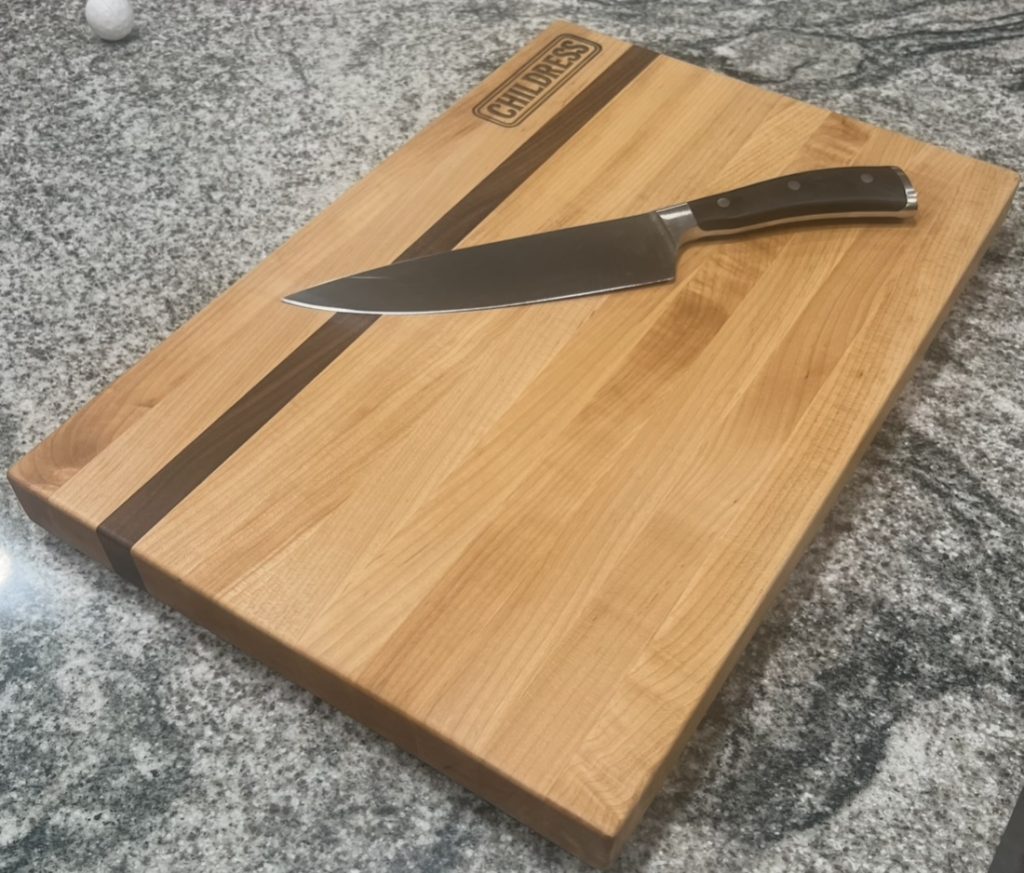
Why do I enjoy cutting and serving boards?
Well, tons of woodworkers start with cutting boards, but that’s not my reason… While it is not my day job now, I do have a culinary background. While working full time, I attended culinary school in the evenings many years ago. This lead to working in a restaurant, catering business, and doing a few competitions in baking and pastry. With my background, I am fond of nice knives, and nice knives deserve a nice cutting board. In my own house, I have replaced most plastic utensils, boards, and serving dishes with wood or glass. Wood is better for you knives and probably better for your health as well. The beauty of natural hardwoods also makes the perfect base for a charcuterie display that your guests will remember.

How do you care for your wooden boards?
The finishing process of all boards I make that will contact food is simply using a food grade mineral oil and natural wax for protection and shine. When you wash the board, hand wash with mild soap and warm water. Do not submerge the board in water or put in a dishwasher. Wash both sides of the board even if one side was not used. Dry off as much moisture as possible with a clean towel and leave to air dry on it’s side if it does not have feet to keep it raised off the counter. If your board dried unevenly by laying flat on a countertop, it could cause the wood to warp.
Your board will come “pre-seasoned” but that doesn’t last forever. Every two to three months, or if your board begins to look dry, you will need to give it an even coat of a food grade mineral oil or cutting board conditioner. A little goes a long way, Just give your board an even coat on all sides, let it sit a few minutes, then give it a gentle buff with a clean cloth to remove any extra oil. This will keep your board like new for years to come.
Face Grain, Edge Grain, or End Grain… What do I need?
So, what do you need? I would reserve face grain (the wide side of the board) for serving pieces and very light cutting tasks. With face grain, you see more of the beautiful variations of the natural wood grain. This comes with a cost. Face grain is weaker and much more likely to show scratches from normal use.
Edge grain (the narrow edge of the board) is my personal choice for an everyday use board. It has a tighter straight grain that’s more durable and resist showing deep knife scratches. One thing I would not do on a edge grain board is heavy chopping with a cleaver. That could cause the edge grain to break.
For heavy use, such as chopping BBQ, I would suggest a end grain board. Just like it sounds, end grain is the ends of the boards facing up. To create an end grain board, you have to first create an edge grain board and cut it into pieces and glue them together end side up. These boards take more work in the building and sanding process, therefor they tend to cost more than and edge or face grain board.
Are you ready to choose the board you need? Whatever you choose, any of the boards can also be customized with laser engraving as well!